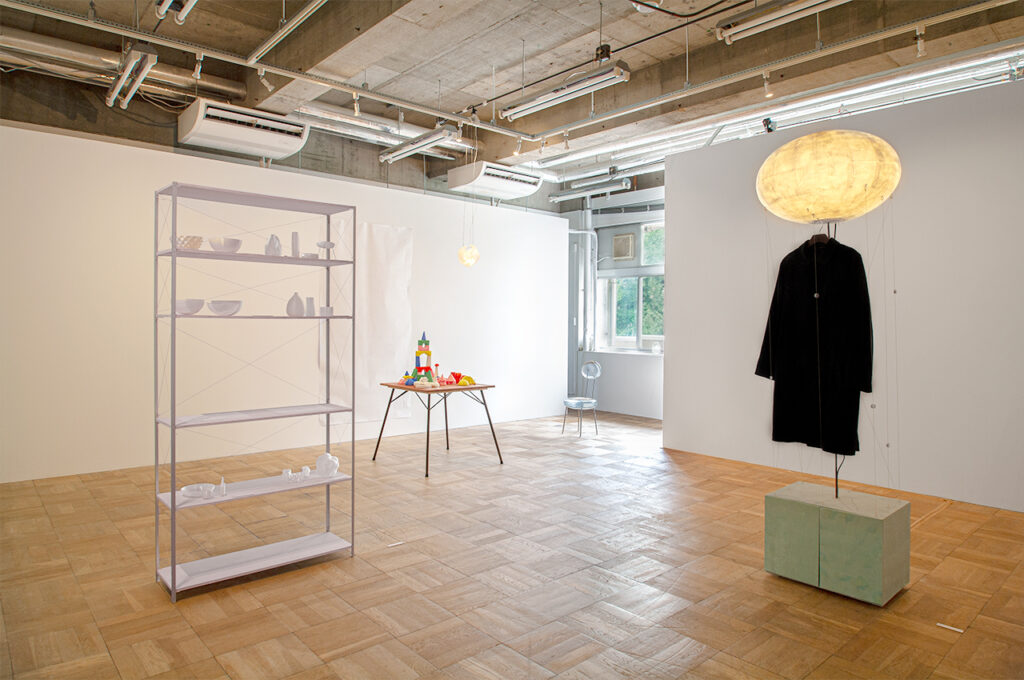
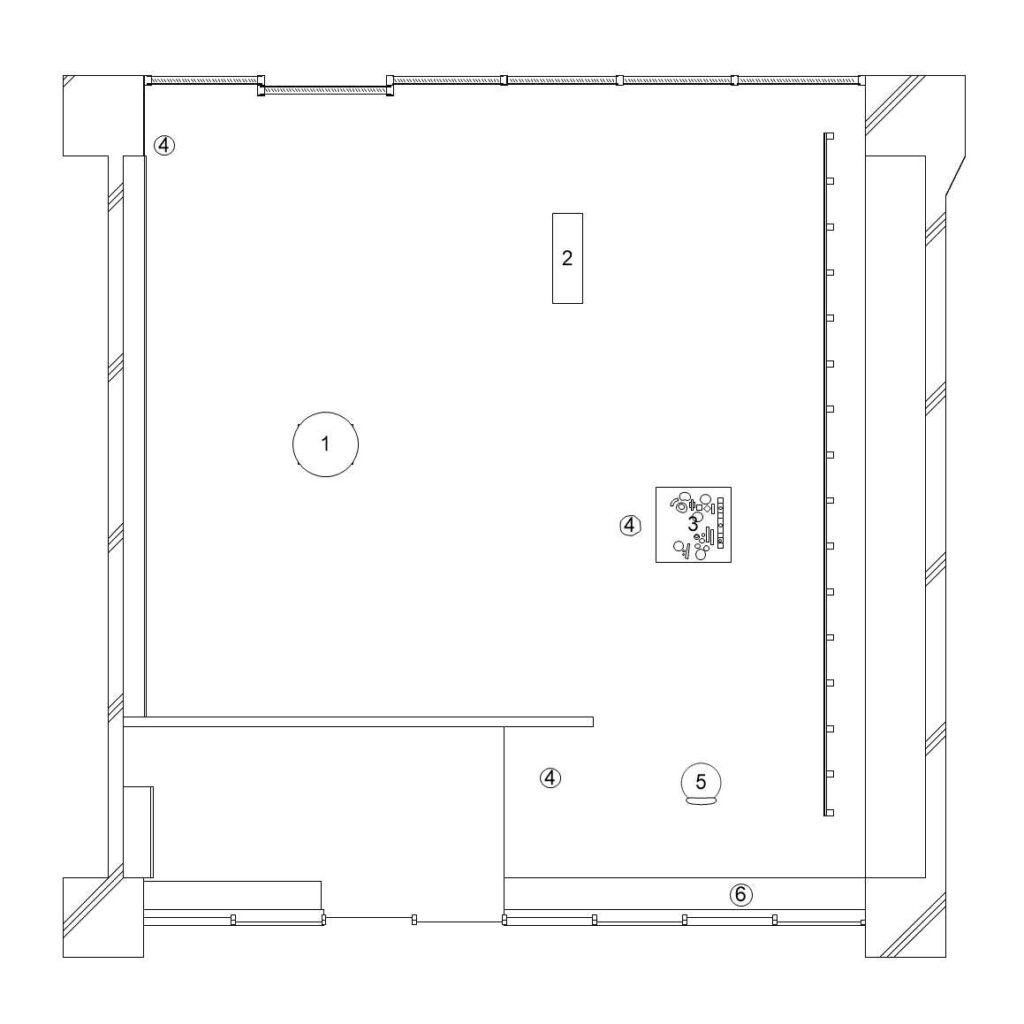
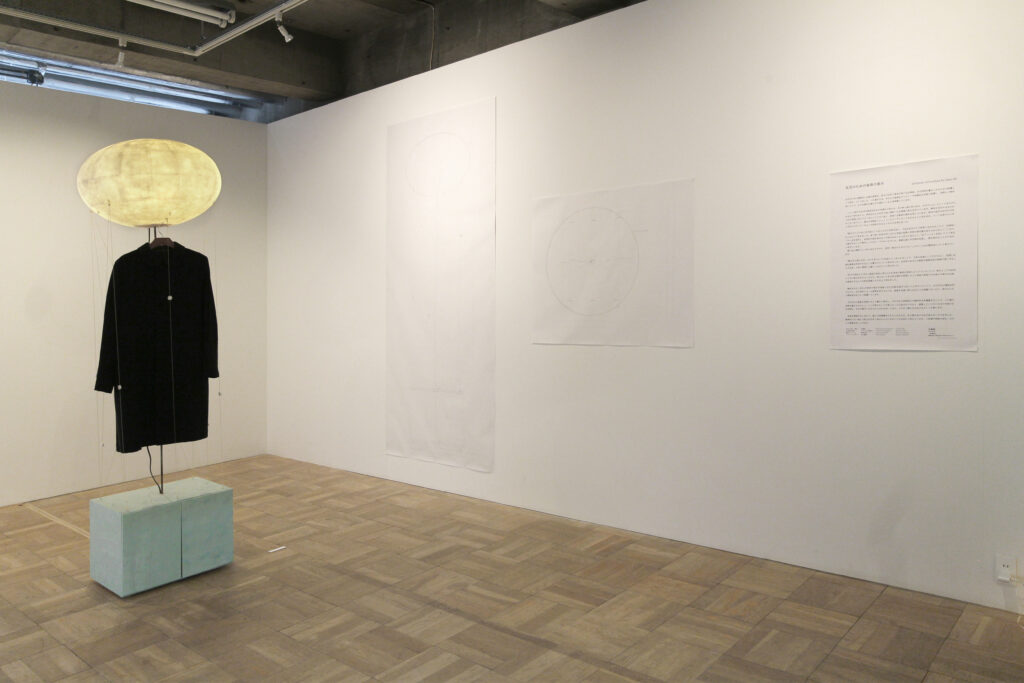
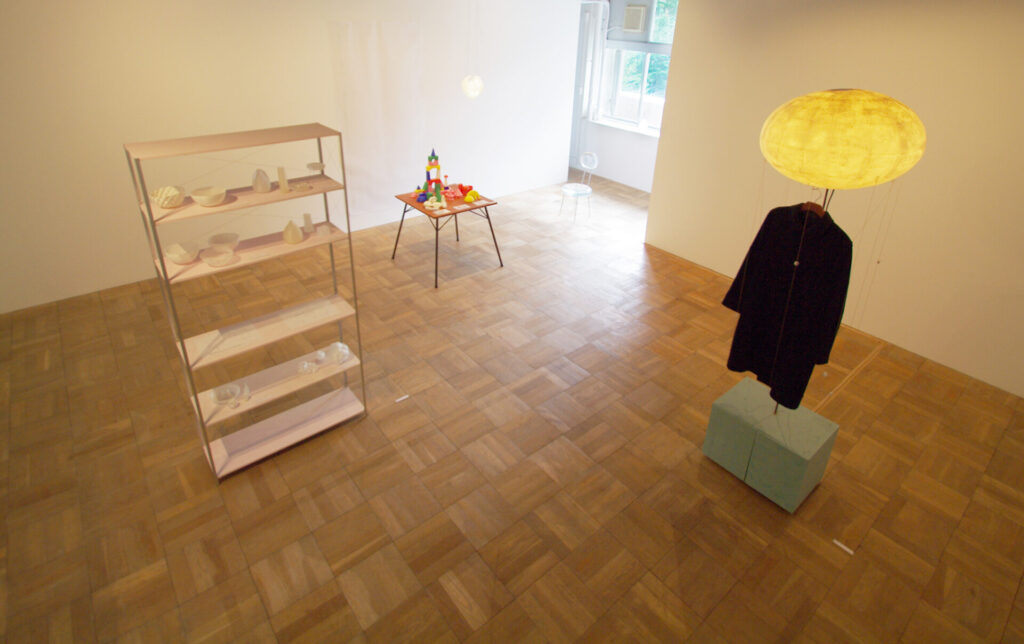
1.Hanger Rack
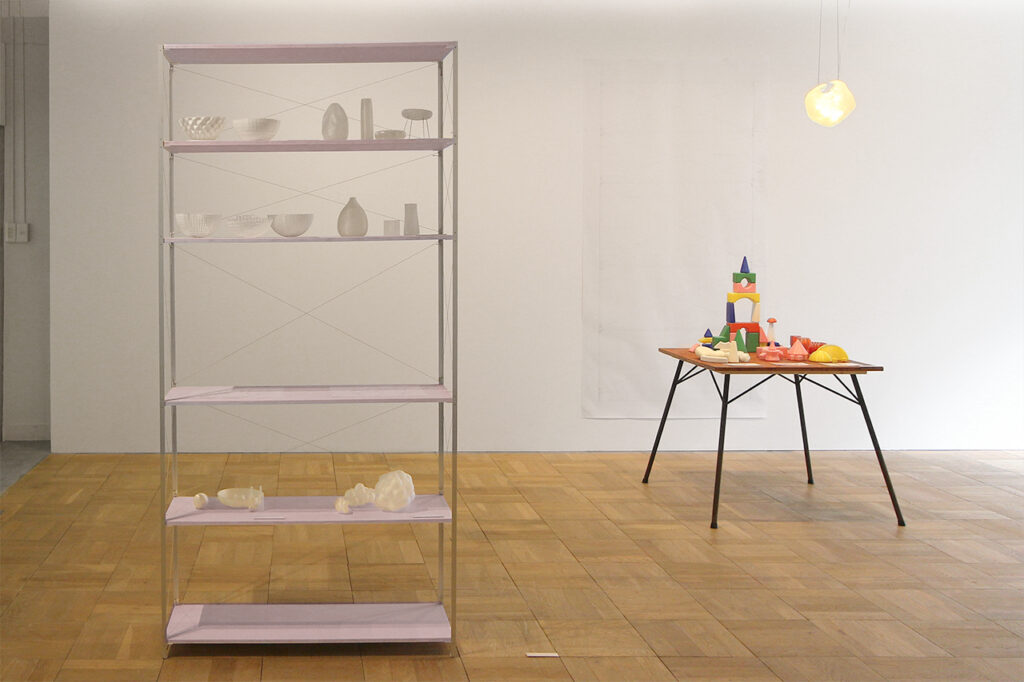
2.Shelf
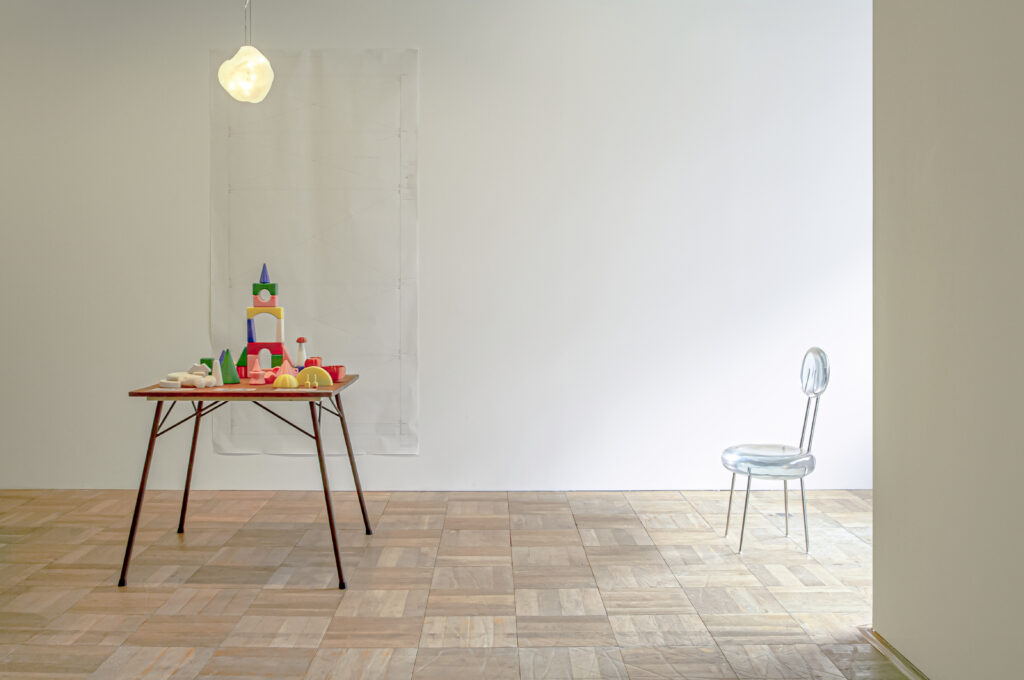
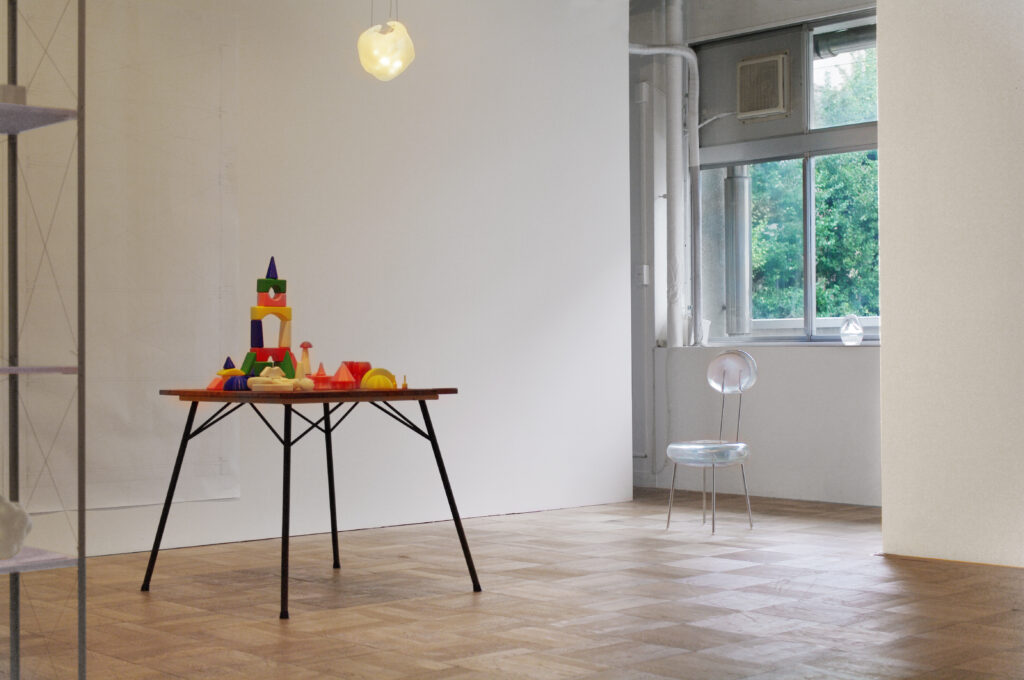
3.Blocks
4.Lights
5.Chairs
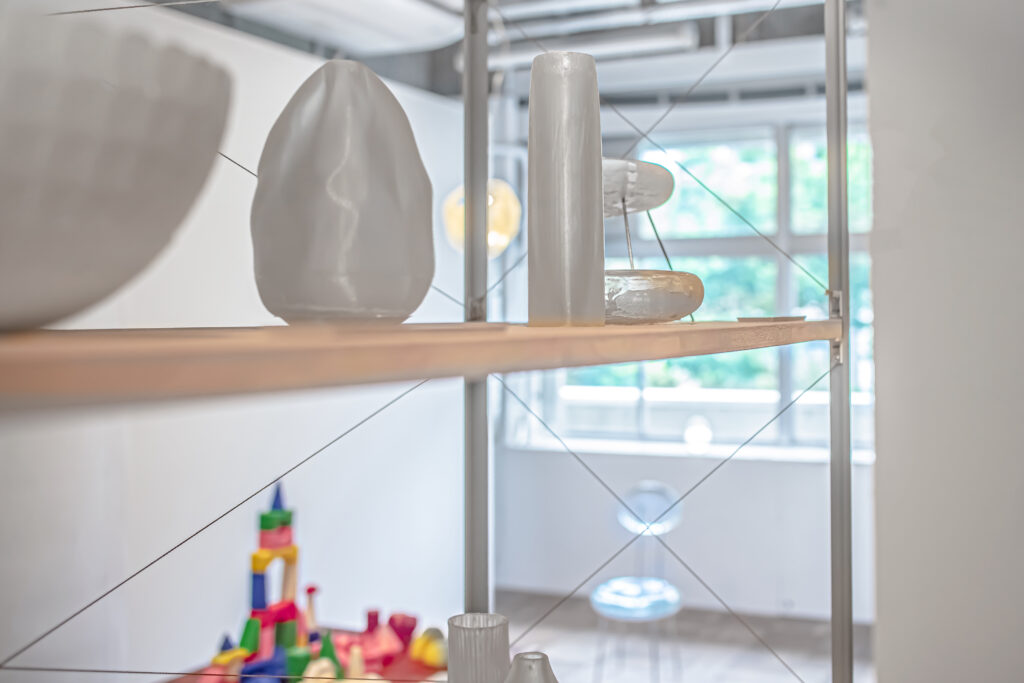
6.Vases
生活のために機能的に必要な家具を、日本の狭小な住環境、生活空間を豊かにするための装置として考え、つくりました。
この展示では、それらをギャラリーの抽象的な空間に配置することで、より本質的な豊かさが現れてくる空間との関係性について再考察しています。
それぞれの家具が空間に豊かに寄与し、関係性を構築することで、この展示空間を豊かなものとし、またそれが生活空間においても、生活を豊かにするものとなればと考えています。
We have designed furniture which is functionally necessary for living as a device to enrich the narrow living environment and living spaces of Japan. At this exhibition, we have arranged them in the abstract space of the gallery and reconsidered their relationship with the space so that a more essential richness can be seen. We hope that each furniture will contribute to enrich the exhibition space, and that it will also enrich our lives when placed in our living spaces.
家具と彫刻の狭間でものをつくる
月のように浮かぶ照明。その真下に浮かぶコート。これは照明器具でありながら、コート掛けでもある。浮遊する惑星とコートというシュルレアリスム的な組み合わせに、ルネ・マグリットの絵画を思い浮かべた人もいるだろう。その横には、コート掛けとは相反するように直線的なデザインのシンプルな棚。華奢な机の上には様々なかたちをした原色の積木が並んでいて、パウル・クレーの抽象画のように心が弾む。窓際には、差し込む光を受けて表情を変える透明な椅子と透明な花瓶が共鳴するように佇んでいる。水面のように外の景色を反射させ揺らぐさまは、印象派の表現を思い起こさせる。ひとつひとつが、ゆったりとした空間に配置されることで周辺の空気をまとい、各々の性格を主張してくる。まるでドラマの主人公のように。
この展示空間とはうってかわって、これらの家具が制作されたのは、佐藤がここ数年生活を営んでいる都内の古くて小さなアパートである。狭い部屋で様々な要求を満たし、願わくば部屋を彩ってくれるような家具を見つけることは容易ではなく、彼は自分のために家具作りを始めた。東京都心に住んだことがある人はわかるだろうが、都市郊外や地方に比べて都心のアパートや戸建ては非常に狭い。限られた土地に建てられる狭小住宅(最小のスペースを最大限に活用する日本人の術は世界一に違いない)。特にコロナ渦以降、家の中で過ごす時間が増えると、居住空間をより快適に、心地良いものにすることの重要度は高まり、家の中の大きなスペースを占領する家具を選ぶことは更に重要な行為となった。東京都心に住む人々が抱えるそのような課題を再認識した佐藤は、「住環境や自分の生活の根源的な要求* 」に合わせたものを選び、家具を買うのではなく作ることによって生活空間を豊かにできないだろうか、と考えた。
制作は試行錯誤の連続だった。彼は建築設計に携わってきた人間で、家具のデザイナーでもなければ職人でもない。しかしそれを逆手にとって、家具をどのように作るか固定概念も技術もないところから、様々な素材と技法を試した。彼が選ぶ素材は、エポキシ樹脂のように大量に使用すると高額になるものから、ホームセンターで安価に入手できるものまで幅広い。技法も様々で、木板や金属の部材を組み立てる大工作業をする一方、それぞれの部材を結合させるための小さなパーツは精密さを求めて3Dプリンターで作る。一般的な家具の作り方にこだわらず、求めるかたちを再現するために手法を選ぶ姿勢は彫刻家に近い。彼が作る有機的なかたちの照明やスタディ、宇宙をも感じさせる色とりどりの玩具を見れば(佐藤は子どもが遊ぶ玩具も家具として捉えている)、彼が家具を彫刻のように造形していることがわかるだろう。
絵画や彫刻を家に置くのは敷居が高いと感じる人も、家具であれば生活に取り入れやすくないだろうか。機能性、利便性を持つ一方で、使っていない時もそれ自体が存在感を放ち、いつもの景色に少し彩りを加えてくれる。佐藤の作品は、家具としてはまだまだ荒削りかもしれない。しかし、十分な機能性と、部屋の片隅に置いておきたい温かみと面白みを持っており、生活を豊かにするための道具になったと思う。この約8ヶ月間、彼の仕事を企画・展示のアシスタント、兼友人として傍から見てきて、彼がこれらの家具を今後どのように生活の糧として成り立たせていくのかを心配混じりに考えていた。しかしそんな心配は不要だったのかもしれない。彼は自分のためにこれらの家具を作っていたし、自分の中に浮かんだイメージをかたちにできる方法を会得したのだから。
徒然なるままに書き綴ってきたが、これらの家具や道具を、この空間を、どのように観るかは、観る者の自由だ。いかにして自身の生活を豊かにできるのか、考えるきっかけになれば良いと願っている。
Mayuko B(キュレーター)
* 佐藤はクロード・レヴィ=ストロースの1962年発表の著作『野生の思考』に共感し、「どんな時代も人間の根源的な本質は変わらない。本能的な欲求に正直である」と語っている。また、自身の制作について「現代に生きる原始人(コンピュータとか機械は人より使えるかもしれないが、職人レベルではない)が道具を作っているような感覚」と述べており、その感覚に『野生の思考』がしっくりきているようだ。
Between Furniture and Sculpture― Creating on the Boundary
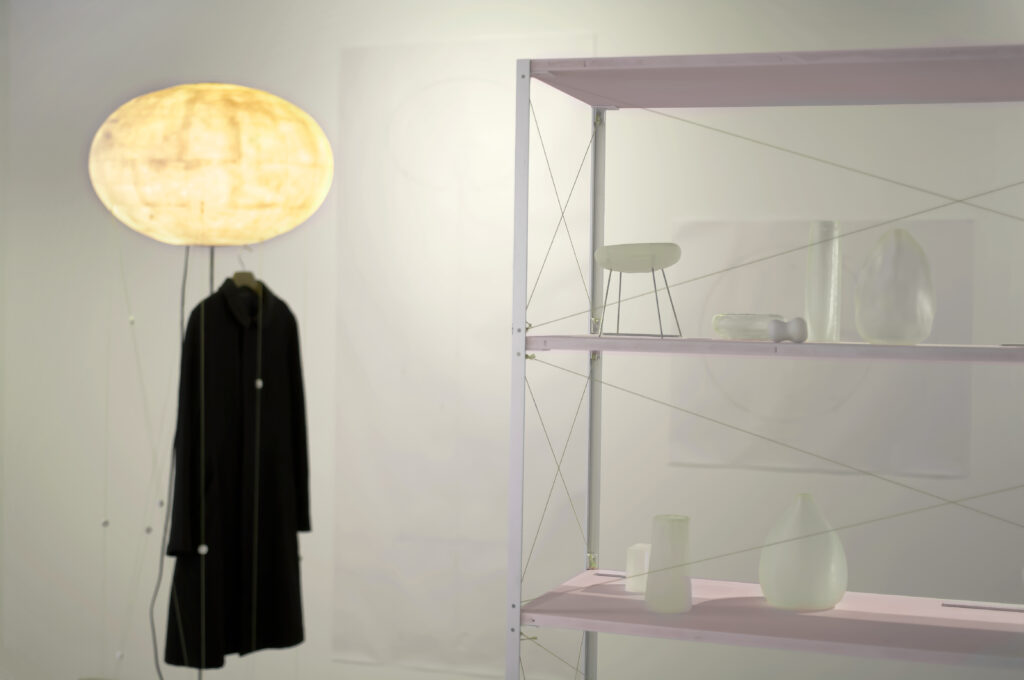
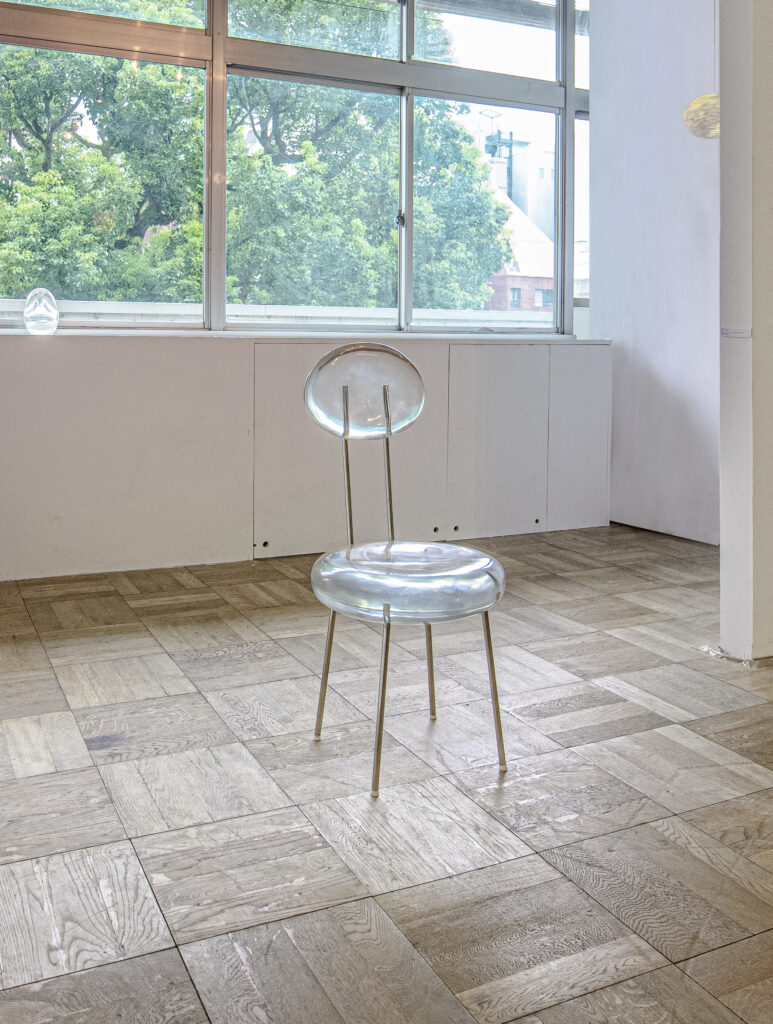
A light floating like the moon. A coat floating just below it. This is both a lighting fixture and a coat-hanger. The surrealistic combination of a floating planet and a coat may remind some of a painting by René Magritte. Next to the coat rack is a simple shelf with a linear design that seems to contradict the coat rack. On a slender desk, primary-colored blocks of various shapes and sizes are lined up, which make one’s heart flutter like an abstract painting by Paul Klee. A transparent chair and a vase of transparent flowers stand by the window, their expressions changing in response to the light that streams in, as if in resonance with each other. The way they reflect and sway like the surface of water reminds me of impressionist expression. Each piece is placed in a spacious space and cloaks itself in the surrounding air, asserting its own character. It is as if they were the main characters in a drama.
In contrast to the exhibition space, these furniture pieces were created in a small, old apartment in Tokyo where Sato has been living for the past several years. It was not easy to find furniture that would meet his various needs in the small room and hopefully add color to the room, so he started making furniture for himself. As anyone who has lived in central Tokyo will know, apartments and houses in the city center are much smaller than those in the suburbs or rural areas. Narrow houses are built on limited land (the Japanese must be the best in the world in the art of maximizing the smallest space). Especially after the Corona Vortex, as more time is spent inside the house, the importance of making the living space more comfortable and pleasant has increased, and choosing furniture that occupies a large space in the house has become an even more important act. Recognizing such challenges faced by people living in central Tokyo, Sato wondered if it would be possible to enrich living spaces by choosing furniture that matches “the living environment and the fundamental demands of one’s life*” and by making furniture rather than buying it.
The production process was a continuous process of trial and error. He had been involved in architectural design and was neither a furniture designer nor a craftsman. However, he took advantage of this fact to experiment with various materials and techniques, starting with no fixed concept or technique of how to make furniture. The materials he chooses range from epoxy resin, which is expensive when used in large quantities, to inexpensive materials available at home centers. While he uses carpentry to assemble wooden and metal components, he uses a 3D printer to make the small parts that join the components together for precision. His approach is similar to that of a sculptor in that he chooses a method to reproduce a desired form, rather than sticking to a general method of furniture making. His organic lighting, studies, and space-inspired colorful toys (Sato considers children’s toys to be furniture as well) show that he shapes furniture as if it were a sculpture.
Even those who feel that it is too much to put paintings or sculptures in their homes can easily incorporate them into their lives as furniture. While functional and convenient, they also have their own presence even when not in use, adding a bit of color to the scenery. Sato’s work may still be rough around the edges as furniture. However, they have enough functionality and warmth and interest to be placed in a corner of a room, and I think they have become tools to enrich our lives. Having watched his work from the side for the past eight months as his planning and exhibition assistant and friend, I had wondered with a mixture of worry how he would make these pieces of furniture work as a source of livelihood in the future. But perhaps such worries were unnecessary. He was making these pieces of furniture for himself, and he had learned how to give form to the images that came to him.
I have written this in a rambling manner, but it is up to the viewer to decide how he or she wishes to view the furniture, tools, and space. I hope that this exhibition will encourage people to think about how they can enrich their own lives.
Mayuko B(Curator)
* Sato sympathizes with Claude Lévi-Strauss’s 1962 book “Wild Thoughts” and says, “The fundamental essence of human nature remains the same in any age. We are honest about our instinctive desires. He also describes his own work as “like a caveman living in the modern age (who may be able to use computers and machines better than people, but not at the level of a craftsman) making tools,” and “Wild Thoughts” seems to fit that feeling perfectly.

Data
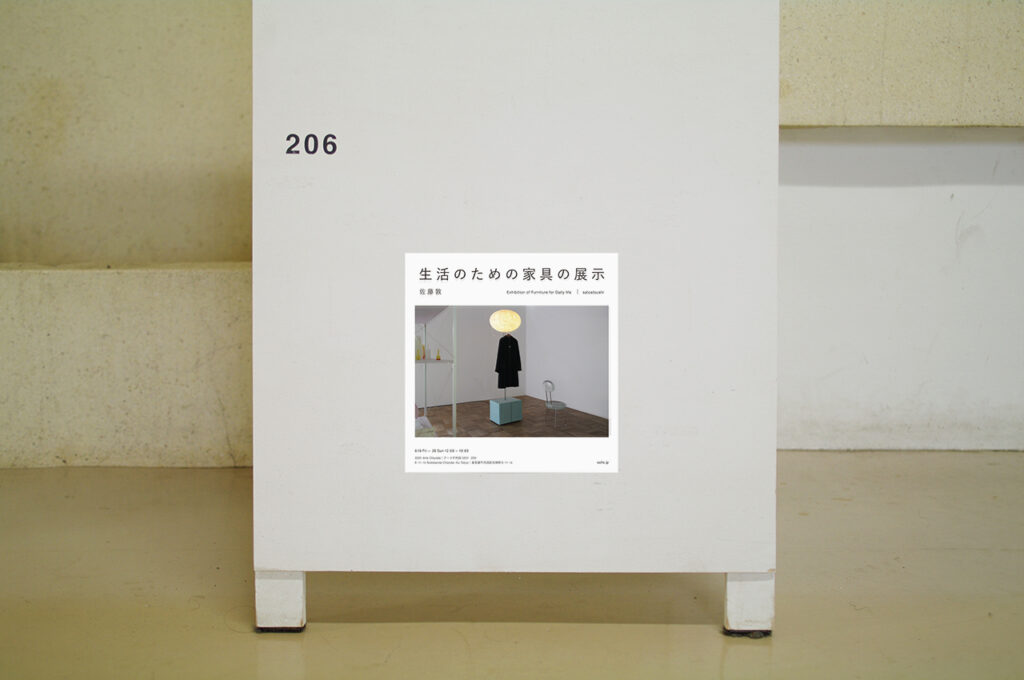
Date: 2022.8.19 -28
Site: 3331 Arts Chiyoda 206
https://www.3331.jp/schedule/005661.html
Curatorial Assistance: Mayuko B
Structural Advice: Tomonori Hamano @hamusystem
Photo: Shohei Suzuki @__s_h_s_
Flyer Design: Natsuki Sakamoto @n.skmt_works